Fairness
What first class still does better
A fair comparison has two sides. On plenty of trips, a first-class ticket is simply the better choice, and it helps to know which ones.
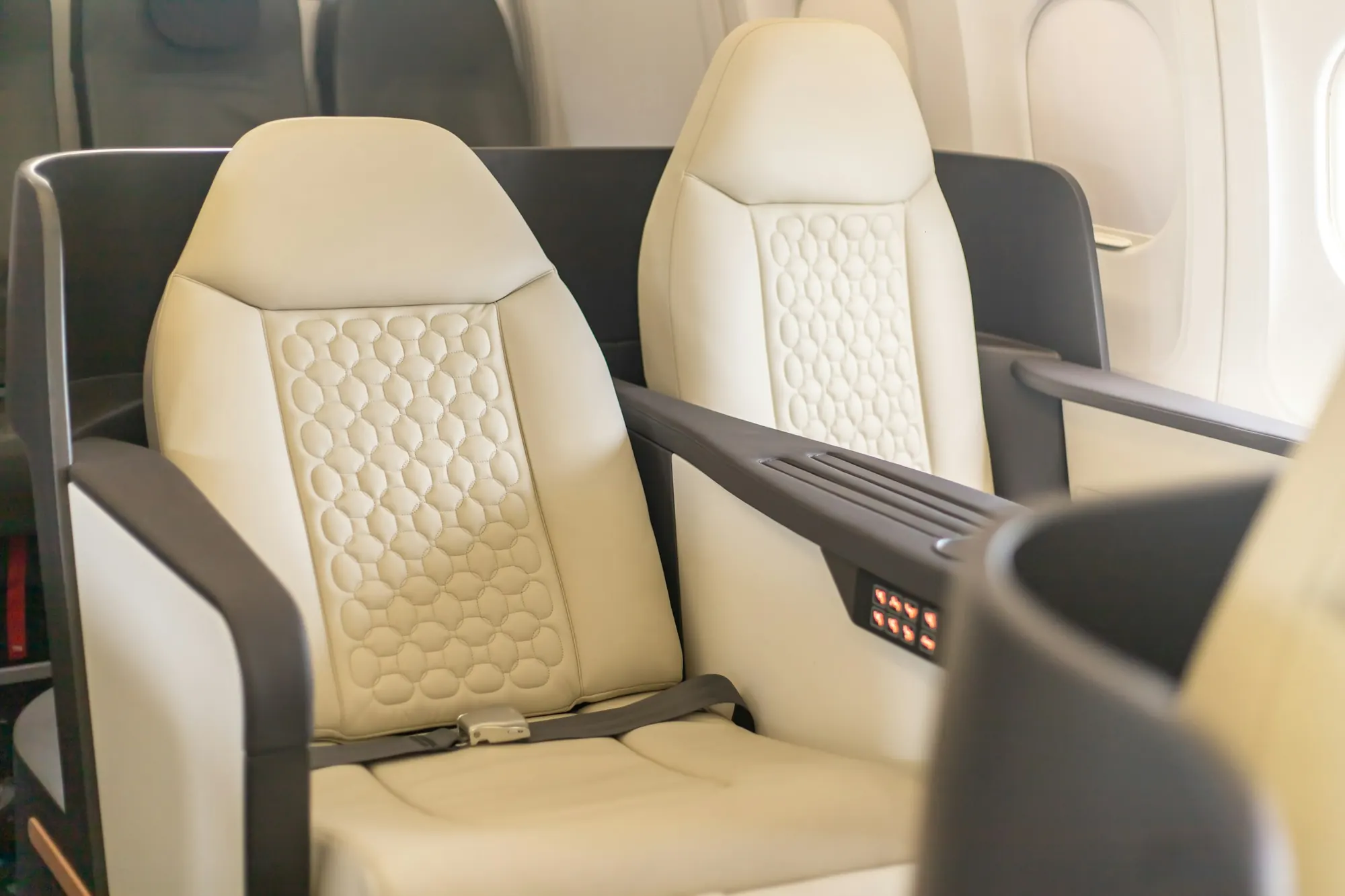
We arrange private flights, so it might seem odd to list the ways first class wins. But a recommendation is only worth trusting if it is willing to point the other way. These are the situations where an airline ticket is often the smarter choice, and the reasons behind each.
One or two travellers
A charter price covers the whole aircraft, so it doesn’t shrink when fewer people fly. For one or two travellers on a domestic route, first class almost always costs less, often by thousands of dollars. Unless the time saved is worth that difference, or the airline schedule simply doesn’t work, the ticket is the rational choice.
Long flights and flat beds
On long international routes, the best first-class and business-class cabins offer fully flat beds, generous space and a cabin crew dedicated to a handful of passengers. Matching that privately takes a large cabin or ultra long range jet, at roughly $8,500–13,000 or $12,000–20,000 and more per hour in the US market. For one couple flying overnight to Europe, a flat bed in first class is far better value.
The balance shifts for larger groups and for routes the airlines serve poorly, but for two people on a major route, the airline usually wins on comfort per dollar.
Lounges, miles and status
First-class tickets come with things a charter can’t offer: airline lounges, frequent flyer miles and the status that comes with them. For travellers who fly often on one airline, those benefits have real value, sometimes enough to tip a close decision.
The safety net of a network
If an airliner has a technical problem, the airline can usually move you to another flight the same day on a busy route. A private flight depends on one aircraft and one crew. Good operators and brokers can source a replacement aircraft when something goes wrong, but on a remote route or a busy holiday, that can take time. Travellers with an immovable commitment sometimes value the depth of an airline network more than anything else.
Price certainty on the day
An airline fare is fixed once you buy it. A private flight has more moving parts: repositioning, daily minimums, de-icing in winter, crew overnights on multi-day trips. A good all-in quote lists them up front, but there is simply more to read. If budget certainty matters most and the schedule works, the ticket is simpler.
Fuel per passenger
A full airliner carries hundreds of people, so the fuel burned per passenger is far lower than on a small jet with a handful aboard. For travellers who weigh that impact heavily, flying with an airline is the lower-impact choice per seat.
| Situation | Usually better | Why |
|---|---|---|
| One or two people, domestic route | First class | Per-seat price |
| Overnight flight to Europe, two people | First class | Flat beds at a fraction of the cost |
| Four or more people, short route | Private | Cost shared; hours saved |
| Destination needs a connection | Private | Nonstop to a closer airport |
| Pets, bulky gear, privacy | Private | One cabin, your rules |
| Frequent flyer on one airline | First class | Lounges, miles and status |
General patterns, not rules. Fares, routes and group size decide each case.
Points, upgrades and the real fare
Many first-class seats are not bought at the full cash fare. They come from upgrades, points or corporate agreements, and for travellers who fly that way, the cash comparison with a charter barely applies. If your first-class seat effectively costs a few thousand points or an upgrade certificate, the private flight has to justify itself almost entirely on time, privacy and convenience.
Busy routes between big cities
Between two major hubs with frequent service, such as New York and Chicago or Los Angeles and San Francisco, the airline schedule is dense, nonstop and forgiving. Miss one flight and another leaves soon after. On routes like these the door-to-door advantage of a private flight shrinks, especially for one or two people travelling light, and first class is usually the more sensible spend.
When the timetable already fits
If the airline’s schedule matches your plans, the destination airport is close to where you are going and nobody in the group needs special handling, much of what a private flight offers is already covered. The decision then comes down to price and preference, and the ticket often wins on price.
Where private still wins
None of this changes the cases where private flying is clearly better: groups of four or more on short routes, destinations that need a connection by airline, trips with pets or awkward luggage, days with several stops, and schedules that simply don’t fit the airline timetable. In those cases the extra cost buys hours and control that a ticket can’t.
How we use this
When you ask us for a quote, we will tell you if first class looks like the better option for your trip. Most of the time you will already know, because you have checked the fare. If you haven’t, our calculator sets the two side by side, and a quote for your actual dates settles it.
And if the numbers point to the airline, that is a perfectly good outcome. Many of the people who ask us about private flights end up flying both ways over a year: first class for the routine trips between big cities, and a private aircraft for the family holiday, the awkward connection or the day with three stops. Knowing which is which is the point of comparing.